

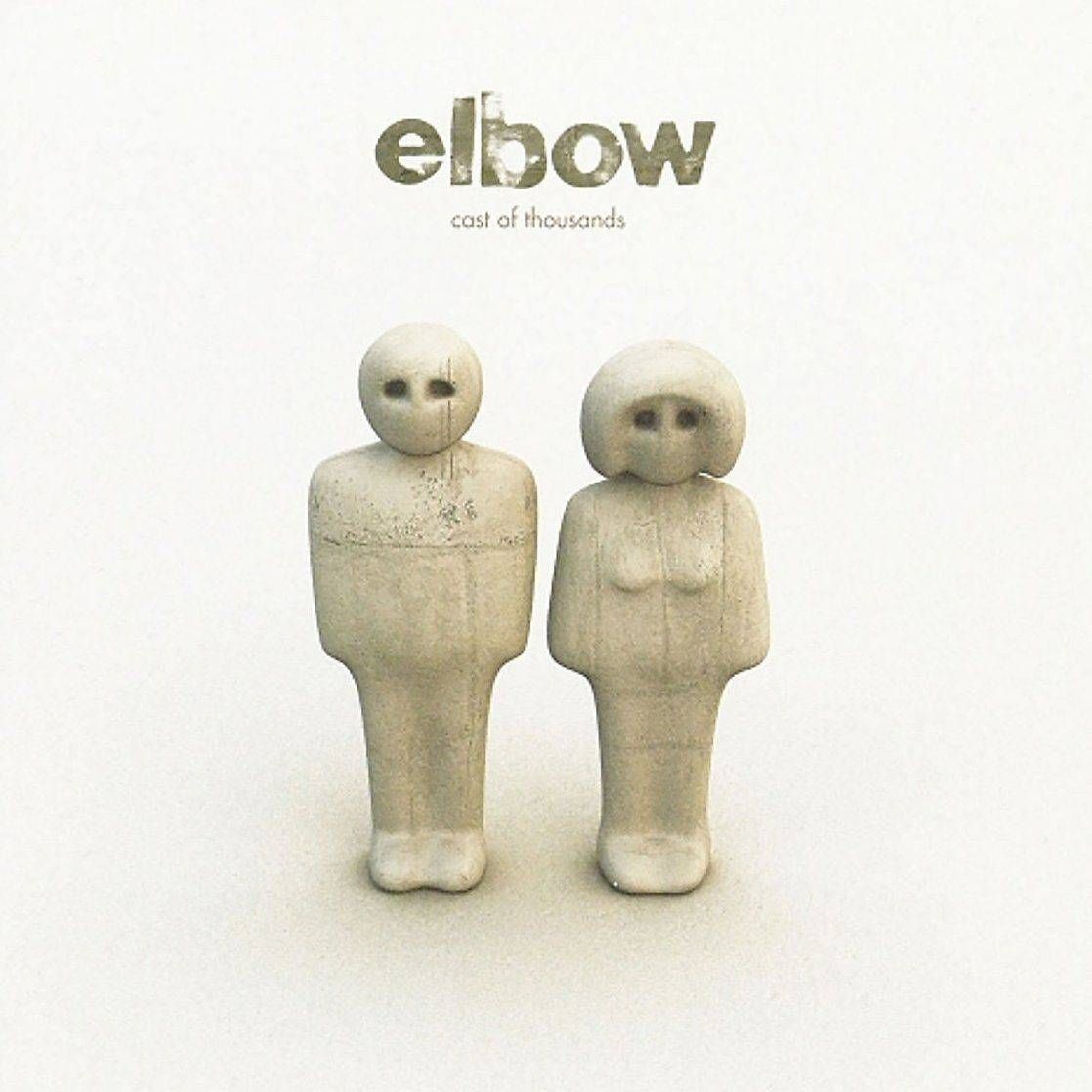
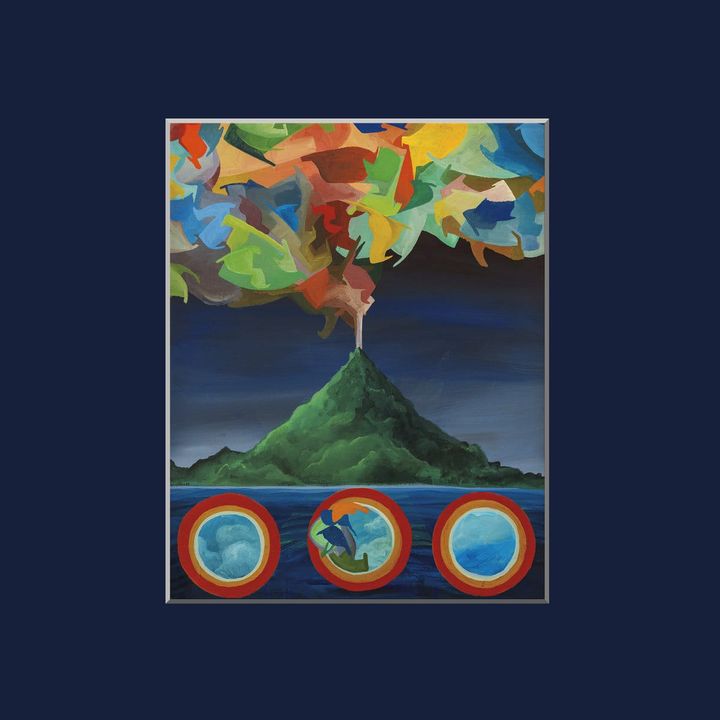
Elbow – Cast of Thousands
Elbow’s second album is a grower. It’s not as strong as their debut, but write it off at your peril.
Elbow’s 2001 debut album, Asleep in the Back, was a precocious vintage, the result of ten years’ restive marination in the body-fluid-strewn streets of Bury. It proved the axiom about the rarest, finest blooms requiring a soil starved of nourishment and roots constricted in cruel bonds of despair.
Cast of Thousands was made, originally, in a converted chapel on the Isle of Mull, and that relocation of (literal) creative landscape accounts, I’m sure, for much of both its strengths and its weaknesses. It’s a grower—no doubt about that. First time through, I was dismissive - the sort of thing, I said to myself, that I imagined Sir Paul might hum along to at one of Stella’s shows. “Not bad,” I imagined him saying, “for a second album.” Certainly nothing in it for a miseryguts indie-snob like me. But it grows. Like Popsie, it grows.
So many references! From Hendrix’s Electric Ladyland in “I’ve got your number” to Snooks himself (Eaglin—the legendary blind New Orleans blues singer) in “Snooks (Progress Report).” And, over and over again, The Beatles. They’ve become the Beethoven to every serious musician’s Brahms, haven’t they? “That accursed, beloved shadow that bestrides us all.”
“Ribcage” is a gloriously sunny start, incorporating into the distinctively left-field Elbow mix the bewitching god-snogged sonorities of the London Community Gospel Choir, who re-appear later on the astonishing “Grace Under Pressure” (more below).
After “Ribcage” comes the somewhat cynical “Fallen Angel,” the strummin’ equivalent to Doves’ “Poundin’”—an equally vacuous singles sop to the kiddyland of MTV and ToP; then it coasts for a bit. As Garvey puts it in “Fallen Angel”: “Choose your favourite shoes / And keep your blues on cruise control.” My first reaction was that tracks 3 to 9 were fillers: this was both unfair and untrue, but still, for Mr Grumpy here, nothing in those seven tracks ignites the marrow in the spine in any way comparable to, say, “Any Day Now” or “Powder Blue” on Asleep in the Back.
Take “Fugitive Motel,” for instance: wistful, romantic (overall, I forgot to mention, this is a very ‘romantic’ album, which in itself takes a bit of getting used to), really beautiful, quite affecting. But it’s actually a kind of remix of that incredibly powerful B-side, “George Lassoes the Moon,” on The Noisebox EP—their first release in 1998—which was all raw anguish and excruciatingly tortuous melodic evasions—music as a way of dealing with pain—whereas there’s something a bit cotton-woolly about “Motel,” as if, having taken a couple of paracetamol, it all feels just a bit, well, cosy really, kind of, don’t know what all the fuss was about, d’you know what I mean? That tour Elbow did with Doves (there’s another band that got bitten by the happy-bug in their second album) initiated an ongoing identity crisis (some people still can’t tell the difference) that’s not going to get resolved by getting all louche and Lighthouse Family on us.
FF to track 10, though, and la pièce de résistance—one of the finest songs so far this year: “Grace Under Pressure” is such a fabulously fine event that all the rest could have been rubbish, for all I care—I’d still be singing along to this when they carted me off in a Bury City Council bin-bag. The ingredients will be the stuff of legend soon enough: the “we still believe in love, so fuck you” chant by 10,000 voices (including me, he mutters, modestly) one drizzly grey afternoon in Glastonbury in June 2002; the near-numinous voices of the London Community Gospel Choir; and that drumming! Jupp is emerging as one of the genius drummers of the moment, not least because he’s so clearly infatuated with the tone and pitch of his skins as much as their rhythmic potentials—the way they can define the key (and therefore the emotional superstructure) of a song just as much as any other instrument. “Any Day Now” on Asleep in the Back perfectly exemplifies that, as does “Snooks” on this album. And, in “Grace,” Jupp surpasses himself. I hate anything remotely smelling of anthems normally. They scare me—all that crypto-fascist massed outpouring of emotion—shudders. But “Grace Under Pressure” manages something that I don’t think I’ve heard achieved successfully since perhaps the greatest single of all time—“All You Need Is Love”—which managed to be at the same time uplifting, unifying, optimistic, and joyful, without making your toes curl once.
Who knows whether that gestation period in that isolated Calvinist chapel had anything to do with it, and who would ever have thought a bunch of miserable North Mancunian prog rockers like Elbow would produce something out of the same stable as “All Things Bright and Beautiful,” but hey, hallelujah, thank the lord, maybe hymns are set to be the new prog blues for a while. Fine by me. I was brought up a Methodist, and I still believe in love, so fuck you.
Cast of Thousands was released on 18 August 2003 via V2.

Related Articles
 No Ripcord
 No Ripcord

 No Ripcord

 Juan Edgardo Rodríguez
 No Ripcord
 No Ripcord
 No Ripcord
No Ripcord reviews will always be free to read. If you value independent music criticism, you can support the site with a $20 annual subscription.
Comments ()