

Mastodon – Marrow Deep
On their ninth studio album, the heavy metal band hints at intriguing new directions for their collective sound.
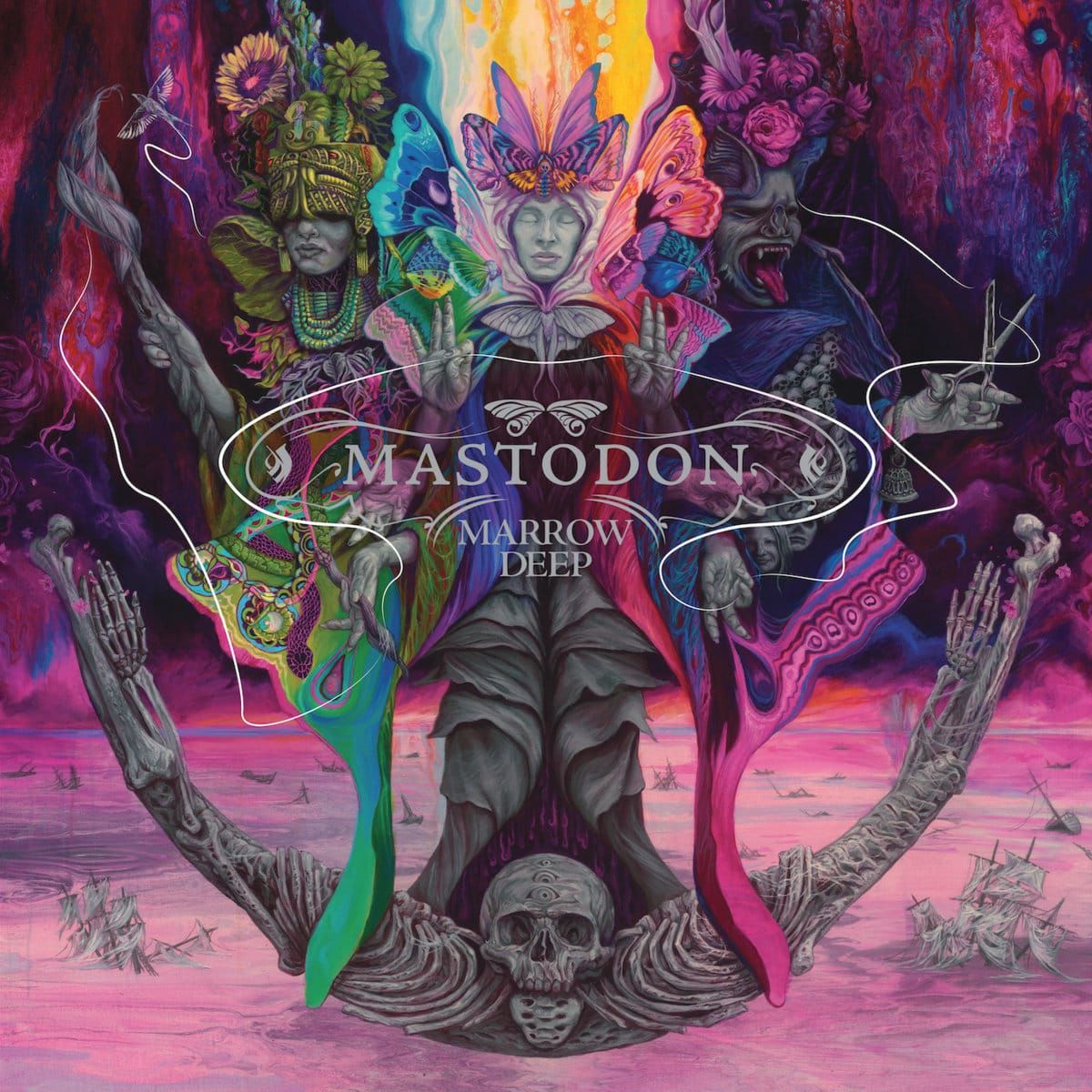

Marrow Deep finds Mastodon at a pivotal point in their history. Last year, the band endured the tragic passing of talismanic original lead guitarist Brent Hinds. Hinds left the band a matter of months beforehand, with tensions running high and remaining members Bill Kelliher, Troy Sanders and Brann Dailor did not have a chance to properly resolve these before his passing. Bill, Troy and Brann have regrouped here with guitarist Nick Johnston and keyboardist João Nogueira, who’ve been part of the touring outfit since 2025 and 2021, respectively.
First port of call for any devotees of the band should be early single “Your Ghost Again,” which manages to nail what a lot of the heavier tracks appear to be going for here, marrying dense, almost Remission-era riffage with a massive-sounding, doomy chorus line—a solid earworm with repeated listens. You are also given a preview of some of the open space afforded in arrangements for keyboard sections, before the bridge builds into a crushing, sawblade guitar riff. There are a number of pieces which build in this manner. “Snakes for Dinner” winds and weaves to a similarly pounding chorus, with curious lo-fi drum breaks giving way to each verse. The outro features old friend of the group Josh Homme, who of course lent his vocals to “Colony of Birchmen” on Blood Mountain. Here, he contributes to a similarly eerie vocal harmony, which drops to acapella as the track closes. On both of these singles, the sense of controlled chaos is well handled; there are others where the effect isn’t as pronounced (“Golden Spires” and “Poisonous Weapons,” in particular).
The most palatable arrangement for any new listeners to the band would almost certainly be “In the Ruins,” which intros with a catchy guitar riff and gently builds into a chugging pre-chorus and the intro riff full fat—a big, bruising sound that should sound great live. If your poison is Mastodon at their more progressive, then “They’re Coming For You” should satisfy—Kelliher’s intertwining guitar riffs weave tightly with Johnston’s, channeling a Thin Lizzy feel through the verses. Dailor slices and dices around everything with his usual surgical precision.
Marrow Deep works best when it gives space to the two new members simultaneously, none more so than on closing epic “The Three Fates.” Johnston and Nogueira trade solo sections on a devilish sounding jam that builds to a thumping crescendo. Whether intentional or not, it’s a sensible move to have the pair share the limelight together in sections, taking any pressure off either performer stepping into Brent’s role as the player who brings the track home. This said, both players do have their own sections to shine; Johnston's guitar solo on “Out Like a Lamb” is distinct and brilliantly performed, and Nogueira contributes textures rarely heard before on Mastodon records—particularly in the intro to “Moth and Bone.”
As for the original members, Dailor is as reliable and technically dynamic as ever behind the drums. Some of his vocal melodies run the risk of repeating themselves, but this is only occasionally noticeable. As always, they are a good foil for the roar of Troy Sanders, although you do catch a rare glimpse of his cleaner vocal capabilities on “A Vampire’s Demeanor”; more of this side of his voice would be good to hear. Across the record, his bass playing is strong and purposeful (the bass end is given some fantastic variation by the legendary tones of Geezer Butler on “The Vanishing”). Bill Kelliher is at the heart of proceedings and sounds on good form. The riffs throughout are equal parts fiendish and brutal, the clean playing well-performed and recorded (see “Moth and Bone” and the excellent “The Vanishing”).
With Marrow Deep, Mastodon have delivered a powerful and musically challenging album, hinting at intriguing new directions for the band’s collective sound.
Marrow Deep is out now via Loma Vista Recordings.

Related Articles
 No Ripcord
 No Ripcord
No Ripcord reviews will always be free to read. If you value independent music criticism, you can support the site with a $20 annual subscription.

Comments ()