

The Wrens’ The Meadowlands Revisited
Released in 2003, The Meadowlands is regarded as an indie rock classic. But how does the final album by New Jersey’s most famously unreliable band stand up today?
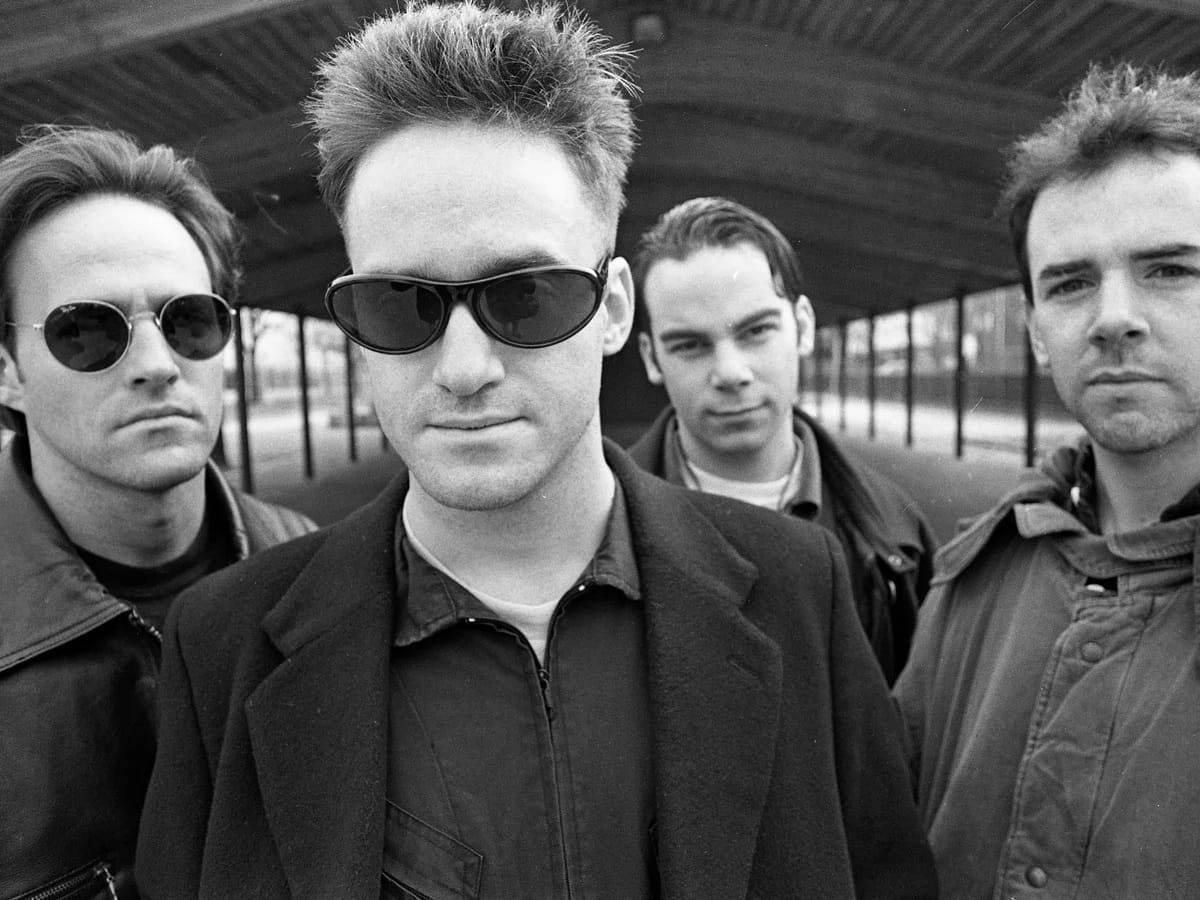
In Records Revisited, two No Ripcord writers return to a significant album from the past to see how it holds up today. For our inaugural edition, we return to an indie rock classic from New Jersey’s most famously unreliable band.
David – Revisiting The Meadowlands
Formed in New Jersey in 1989, The Wrens signed to Grass Records—home of Toadies and Brainiac—and released two well-received indie rock albums, Silver (1994) and Secaucus (1996).
At just under 69 minutes in length, Silver is very much a product of the CD era: plenty of ideas, not a great deal of editing or quality control. It’s a decent debut, but not something I feel compelled to return to. Secaucus is a different beast. It’s not The Meadowlands, but you can at least make out the foundations.
If Silver demonstrated chemistry, Secaucus showed flashes of genuine magic: satisfying guitar sounds, sonic range, and great songwriting. The Wrens were poised for something special… and then they disappeared.
Seven years passed before the band’s third album, The Meadowlands, was eventually released, a casualty of record label politics. Grass was acquired by Alan Meltzer in 1996, who had a different vision for the label. The Wrens were offered a lucrative deal with one simple catch: write some hits. They declined, Meltzer signed the likes of Creed and Evanescence, and everyone involved made a lot of money. Except for The Wrens, of course, who lost money, momentum, and a decent chunk of their prime years.
Fortunately, The Meadowlands turned out to be a masterpiece.
The Wrens channelled all their frustrations — with the music business, yes, but also in the member’s gradually diverging personal lives — into a musical monument to heartbreak, regret, and the persistent ebbing away of time.
It’s essentially the soundtrack to the despair of early mid-life suburban inertia (“The House That Guilt Built”), fading dreams (“This Boy Is Exhausted”), broken promises, missed opportunities, and the one(s) who got away (“She Sends Kisses”, “Thirteen Grand”).
Guitarist/vocalist/perfectionist Charles Bissell was a few months shy of forty when The Meadowlands came out; the other Wrens were a little younger. And me? I was 21, entering my penultimate year of medical school, and trying to sustain a long-distance relationship. I loved The Meadowlands then, but revisiting it as a 44-year-old I can relate to its themes much more easily.
Life is good, but naturally, there are things I could have done differently. I’ve opened my mouth when I shouldn’t have and stayed quiet when it would have been far better to speak. I had musical dreams that I let drift away. I’ve made mistakes professionally—and in my line of work that comes with consequences. And there was that one time I got seriously addicted to online chess.
The Meadowlands isn’t my story, but it encapsulates a feeling that I couldn’t empathise with in the mid-2000s. Another of my top-tier favourites, Big Star’s #1 Record is an early twenties kind of record. I connected massively when I first heard it and relate to it in a nostalgic sense now. Listening to The Meadowlands in 2026 doesn’t evoke that same nostalgia. It resonates with the present and makes me reflect on my friends, some of whom I have lost touch with, and others who are experiencing difficult times. I still don’t have an “Ex-Girl Collection”—that long-distance relationship turned into a marriage—but I’ve had front-row seats for enough break-ups and divorces to understand Charles Bissell’s sentiments on that standout.
Many of our favourites don’t stand the test of time. There are plenty of records I loved in 2003 that I’m relatively indifferent to these days (Mojave 3’s turgid Spoon and Rafter springs to mind). In contrast, my appreciation for The Meadowlands has evolved, growing with me. And crucially, its legacy also benefits from the fact they never managed to follow it up.
The Wrens’ Spotify bio describes them as “one of the best bands with the worst luck,” but I don’t think luck was a factor. They were the plucky part-time underdogs who triumphed against the odds to release arguably the best indie rock album of the 2000s. Following up The Meadowlands, with such a profound weight of expectation, challenged their underdog identity. I don’t think The Wrens ever really wanted that pressure—they turned down a seven-figure contract earlier in their career, after all—and luck had nothing to do with it. It’s just who they are — and it’s why The Meadowlands remains a wonderfully unique landmark in popular music.
This essay expands on ideas first explored in a 2025 Substack post.
Juan – Discovering The Meadowlands
Let me begin by clarifying that I was at least aware of the Wrens’ existence in 2003. I mean, how could you not? Being a college student who voraciously read music reviews back in 2003, I’d stumbled onto the occasional glowing review of The Meadowlands. But strangely, it became a passing curiosity outside of the track, “This Boy is Exhausted,” which I heard from either a friend or somewhere on the TV. I’m not sure, honestly. I did love its pristine, horn-filled hook, which my brain computed as existing in the same universe as Eels or Eric Bachmann/Archers of Loaf.
But that’s when my curiosity ended. Maybe it just wasn’t accessible to me at the time, or I never bothered to download it via Limewire. When I look back at what was released in 2003, I can pinpoint when I first heard Broken Social Scene’s You Forgot It In People or King of Leon’s Youth & Young Manhood. And yes, I'll still defend the latter to this day.
Honestly, my first impression going back to it is that it has a very late ’90s feel. There’s so much variety here. “Faster Gun” is such a fun record that, going back to Bachmann, has that urgent guitar crunch you’d expect from him. And isn’t “Hopeless” just the perfect encapsulation of an indie rock record? I was a big Built to Spill fan back then, and I can imagine some of their influence spilling onto them.
But what really surprised me about some of the tracks here is how some of The Meadowlands had that second-wave Midwestern emo feel I don’t typically associate David liking. I mean, I can’t be the only one who thinks that “Happy” has some of that Sunday Day Real Estate/The Promise Ring blueprint all over. Maybe it’s because of Bissell’s vocal delivery on this track, but going by the strength of its hook, it’s certainly a huge compliment. The same goes with “Boys You Won’t,” which has a really impassioned build that just soars.
Rarely do I listen to records that just hit on so many levels. “Ex-Girl Collection” has that Byrds-ian jangle kick that totally appeals to me, and on the other side of the spectrum there’s the propulsive pop-punk of “Everyone Choose Sides,” which fits so well between Superchunk and Superdrag on any playlist.
Everything about The Meadowlands sounds incredibly satisfying, in a way I don’t typically hear on most higher-profile indie rock records these days. So yes, of course it has all the makings of a bona fide classic. We were originally going to call this feature Split Decision, but it would have come across as false advertising, because we’re definitely not split in acknowledging The Meadowlands’ greatness. I just wish I’d heard the whole thing sooner.
Records Revisited is a recurring No Ripcord feature exploring how albums evolve alongside the people who listen to them.
No Ripcord has published independent music criticism since 1999.
Support our work with a $20 annual subscription.
Comments ()