

Tramlines 2026 Review: Sheffield’s Biggest Party Exceeds the Sum of Its Parts
Sheffield’s biggest festival delivered a weekend of nostalgia interspersed with moments of brilliance.

“Rick Ashley [sic]? Who wants to see bloody Rick Ashley? And didn’t the Courteeners headline last year as well?”
My Uber driver, Saadat, is clearly not a fan of the Tramlines 2026 line-up. He further articulated how the festival had lost its way, lacked diversity (“why not book Stormzy?”), and was now essentially serving up nostalgia to a middle-aged crowd.
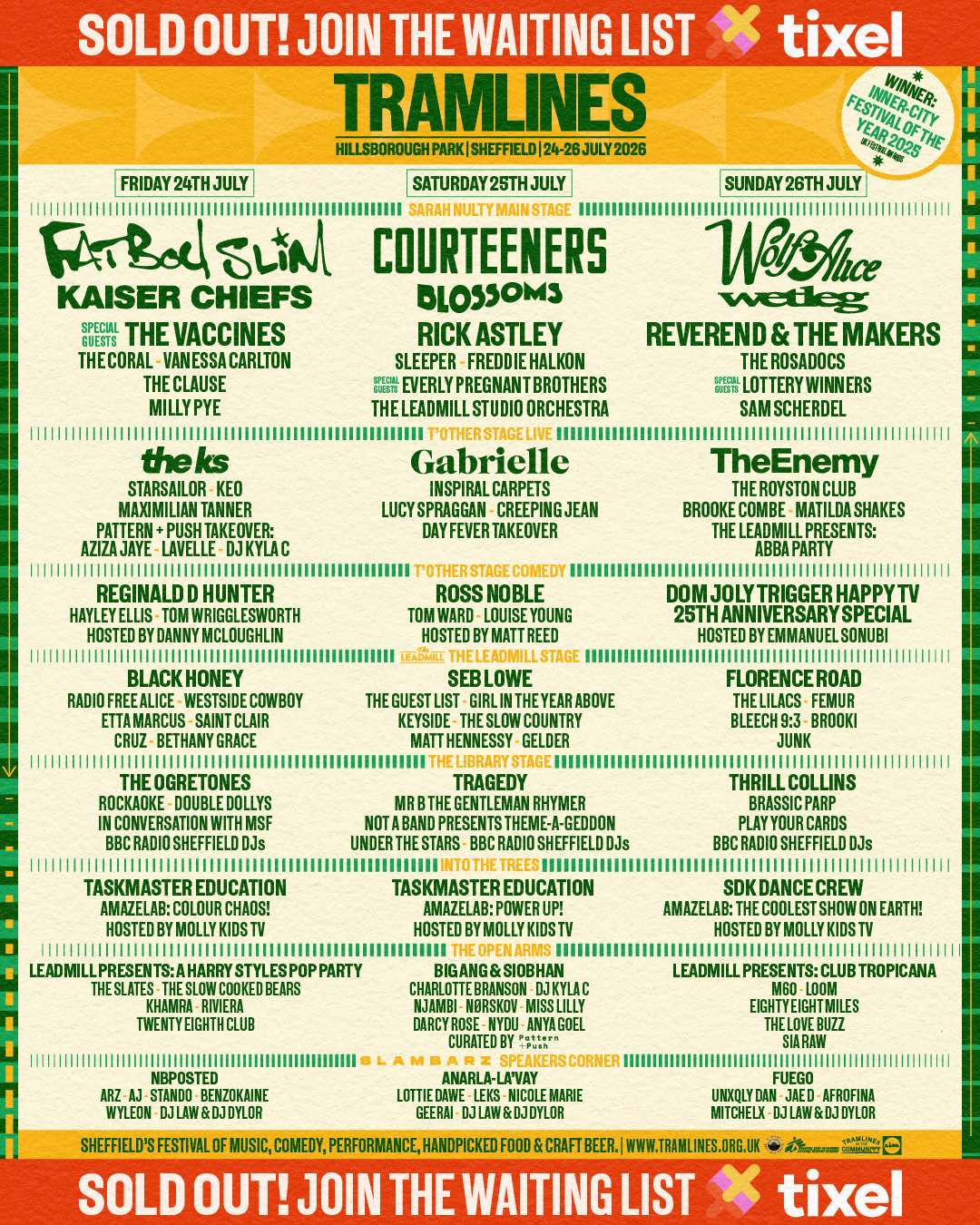
Before entering Hillsborough Park for this year’s festival, I could have easily written up a similar thesis. I wasn’t hugely inspired by a line-up that leaned heavily on headliners whose peak days were over a decade behind them. The Courteeners’ biggest hit “Not Nineteen Forever” came out in 2008, a year after Kaiser Chiefs’ sole number one single “Ruby,” and nearly a decade after Fatboy Slim’s commercial peak. Indeed, it’s hard to imagine the average 19-year-old attending Tramlines in 2026 being ardent fans of Gabrielle, Inspiral Carpets, Sleeper, The Enemy, Starsailor, The Vaccines, The Coral, or Vanessa Carlton either.
And yet, all the young people I saw seemed to be having a great time. The weather was mostly good, the carefully curated line-up of up-and-comers was well-attended, and the atmosphere—from my perspective at least—was warm and inclusive.
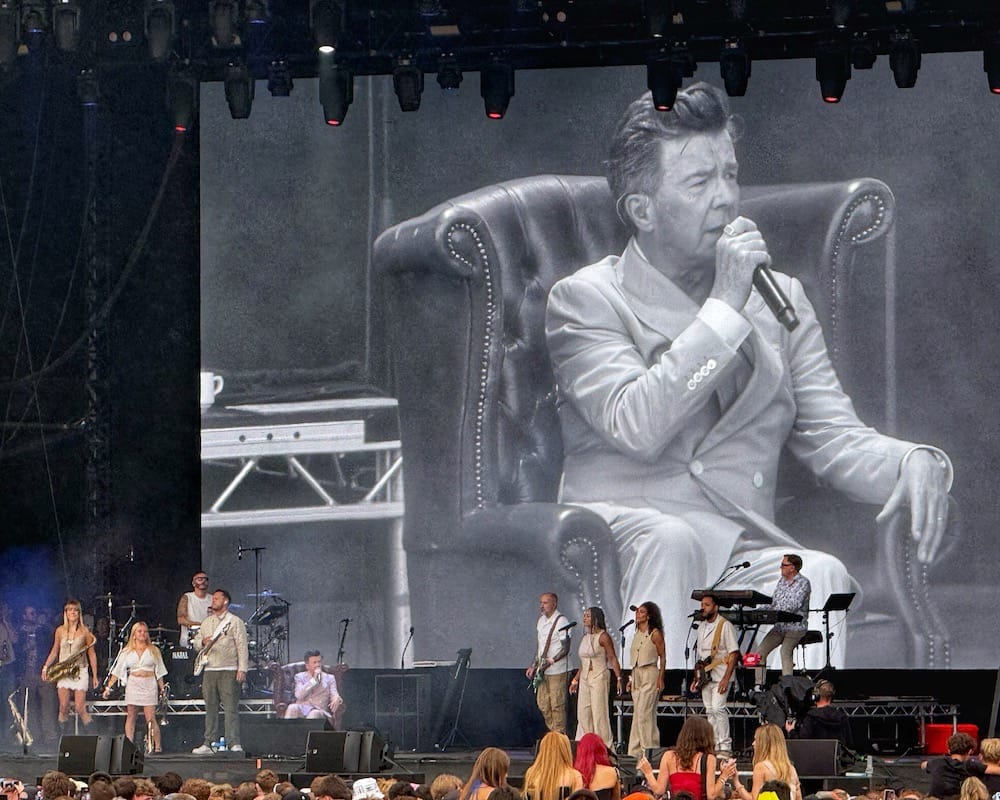
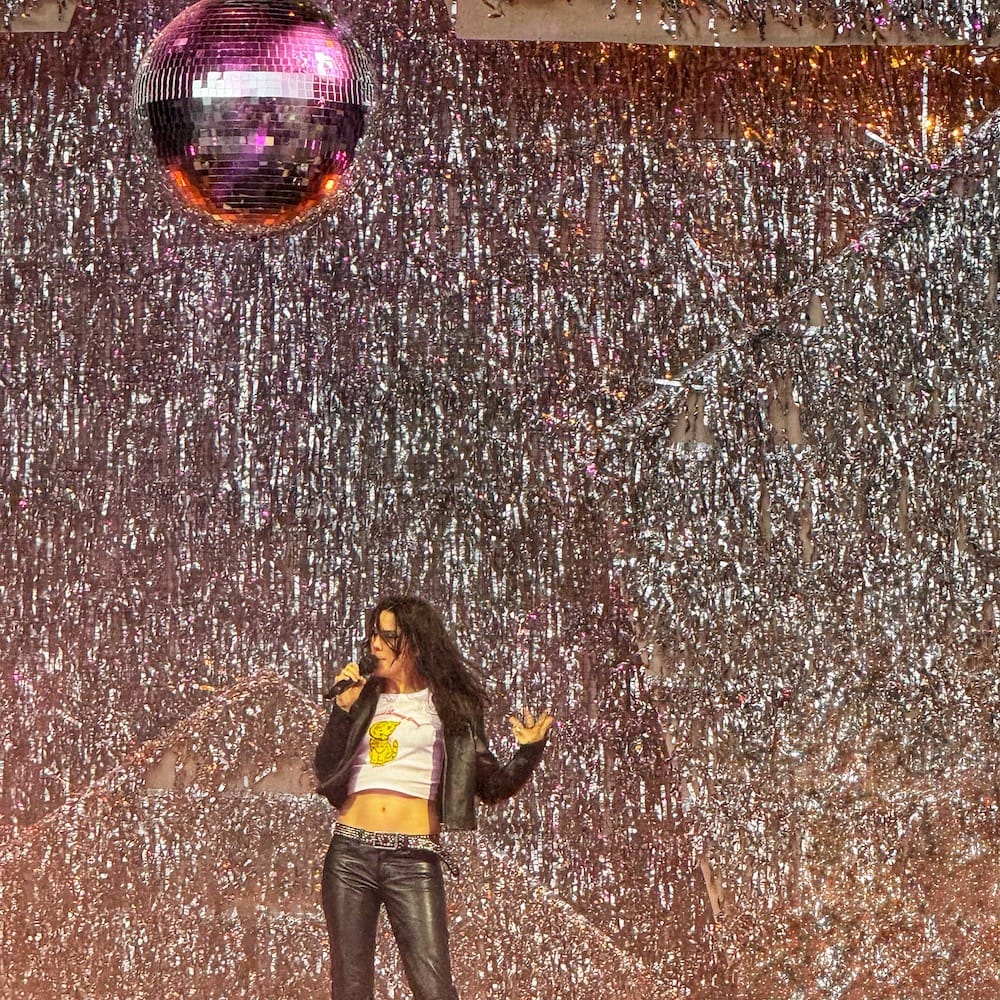
Vanessa Carlton arguably set the tone during her short but sweet set in the Friday afternoon sunshine. She understood her brief and delivered a Tramlines moment with her rendition of the heavily memed “A Thousand Miles.” The festival has smartly tapped into trending nostalgia in the past, recognising festival-goers’ desire to capture a short clip for social media. Natasha Bedingfield and Sophie Ellis-Bextor have played this role in recent years, and the following day Rick Astley did the same. I didn’t have the heart to correct my Uber driver, but the unexpectedly sweary Astley (“Tramlines, you’re young….you’re beautiful…and I’m fucked!”) was the surprise hit of the weekend. Alongside his ’80s hits, he crooned along to moody barroom jams and generously shared the limelight with his stellar backing band. Am I ever going to put a Rick Astley record on at home? No, but the man is one classy entertainer.
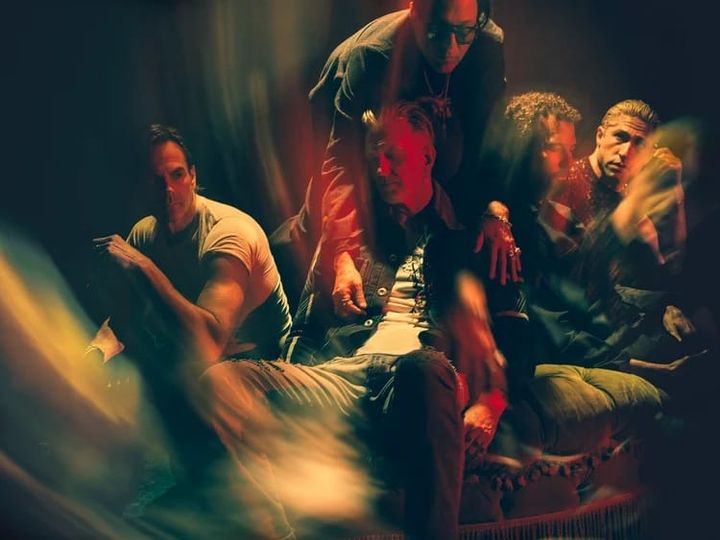
Starsailor deserve a mention, too. I never really rated them first time round, but in retrospect that was probably a reaction to the hype around them. With their world-weary sound, I wonder if they were always a band of forty-somethings at heart? If you haven’t listened to them, check out “Alcoholic,” “Silence Is Easy,” and “Good Souls”—they have aged well.
Away from the heritage artists, Tramlines does a respectable job of snapping up tomorrow’s names. Both Westside Cowboy and Radio Free Alice stood out when the line-up was announced, and both had grown in stature since, to the point where they could arguably have transitioned to a larger tent than The Leadmill Stage. Of the two, Westside Cowboy took the crown for newcomer of the weekend. I was reminded of my first time seeing Arcade Fire—at the sorely missed Leadmill venue, ironically—not so much sonically, but in terms of the band’s energy and spirit. They played all of the excellent So Much Country ‘Till We Get There EP, closing with a note-perfect rendition of the wonderful campfire singalong “In The Morning.”
The Leadmill Stage also played host to the remarkable Etta Marcus—think Alanis Morissette meets Aimee Mann, with a sprinkle of Lana Del Rey—and charming country rockers The Slow Country. A friend told me The Girl In The Year Above was his highlight of the whole weekend, but you’ll have to take his word for that.
I didn’t spend too much time at T’Other Stage this year, but Brooke Combe deserves a mention, for both good and frustrating reasons. It’s unclear why the Midlothian soul singer was 18 minutes late for her 30 minute set, but no explanation was provided to the audience. Still, the 12 minutes we did get were magical, with Combe’s soaring voice evoking a string of Motown greats. Tammi Terrell is obviously a huge influence. Overall, it felt like a real missed opportunity for the enviably talented Combe, who could have truly stolen the show with a full set.
Sunday’s main stage finale was the first thing I marked on my schedule, and neither Wet Leg nor Wolf Alice disappointed. Indeed, by my reckoning, Wolf Alice became the first artist in their prime to headline the Tramlines main stage since Sam Fender in 2022. I hope the festival organisers were taking note, because their celebratory and refreshingly diverse set, which offered everything from soft-rock ballads to hard rock bangers, went down a storm. Wet Leg were better still, but I would say that—they’re probably the most No Ripcord band on the whole bill. “Chaise Longue” provided another moment, naturally, but it was the (faintly) more sophisticated material from Moisturizer that really shone—“pokemon,” “CPR,” and the rousing finale “mangetout” especially.
Tramlines needs more of this. Moments are one thing, but a three-day festival needs to balance its nostalgia with relevance, too.
And as Saadat, my charismatic Uber driver, observed, it also needs more diversity. How about a smart UK Hip Hop booking like Dave or Jim Legxacy next year? Or even a bigger US name like Clipse, who could offer a rare combination of nostalgia, critical acclaim, and commercial relevance? And what about some life-affirming jazz? Ezra Collective would light up the main stage for a late afternoon slot.
Ultimately, the organisers have settled on a sustainable formula—and judging by the smiles on people's faces as they shuffled towards the exits, dancing to the strains of Queen’s “Bohemian Rhapsody,” it works for the festival-goers of Sheffield, too. Tramlines is already a very good festival. With a few considered tweaks, it could become a genuine top-tier event.
Based in Sheffield and Los Angeles, No Ripcord has been publishing thoughtful, independent music criticism since 1999—no hype, no algorithms, and free from industry agendas. The site is run by a small team and supported entirely by readers.
If you enjoyed the kind of writing you’ve just read, please consider becoming a No Ripcord supporter.
Supporters receive our Insider Monthly newsletter, gain access to our full release schedule, and help keep No Ripcord independent.

Comments ()