

Were 2009’s Defining Indie Landmarks Ultimately a Dead End?
Animal Collective and Grizzly Bear defined indie music in 2009, but in hindsight both Merriweather and Veckatimest feel like the end of something special rather than the new beginning we were promised at the time.
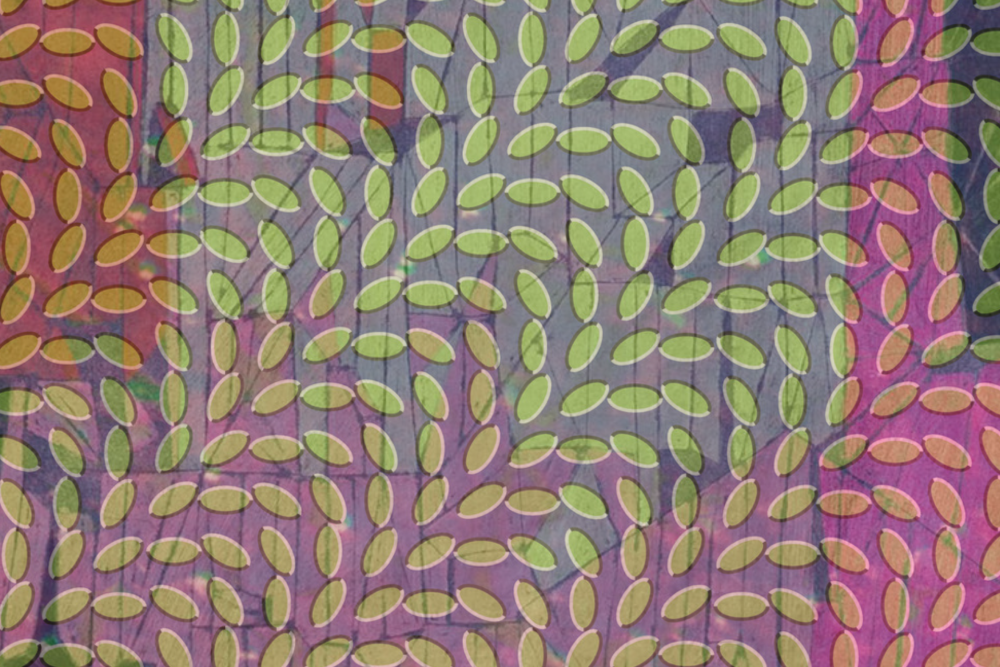
If you were paying attention to music media in January 2009, you’ll surely remember the practically unprecedented level of hype surrounding Animal Collective’s Merriweather Post Pavilion. And make no mistake, No Ripcord was an active participant in the breathless myth-making:
Time may very well lend Merriweather Post Pavilion a legend extraordinary enough to faithfully capture its myriad treasures. By the time that happens, if it ever does and if we could even tell, Animal Collective will be somewhere else entirely, stoned and oblivious, making something new.
So said Tom Whalen in our gushing 10/10 review, which named the hype and considered it over the course of 1,800 words, before ultimately opting to amplify it further with a perfect ten.
A little over four months later, Ryan Faughnder awarded Grizzly Bear’s Veckatimest a 9/10 rating. In December, we named it our #2 album of 2009, trailing the runaway #1 pick—Merriweather Post Pavilion.
These records dominated the year. MPP stood proudly on the top step of the podium on lists from Pitchfork, Treble, Stereogum, Tiny Mix Tapes, Uncut, Popmatters, and Clash. Meanwhile, Veckatimest topped NPR and The Line of Best Fit’s end-of-year round-ups, placing second on several more. They were the consensus choices for 2009, and seemed set to provide the blueprints for indie music in the 2010s—but it didn’t work out that way. Seventeen years on, the affection I felt for these records at the time has faded dramatically.
Of course, opinions shift and hindsight lets us place records in a context that was impossible at the time of release. But I can’t escape the nagging sense that these two records, once seen as the pinnacle of ’00s indie, were actually its final gasps. I’m not going to claim they are terrible albums—that would be revisionism on a perverse scale—but I do feel that the critics of the time lost a sense of perspective when assessing their importance, failing to recognise how they represented the culmination of an era, rather than the start of a bold new chapter.
 No Ripcord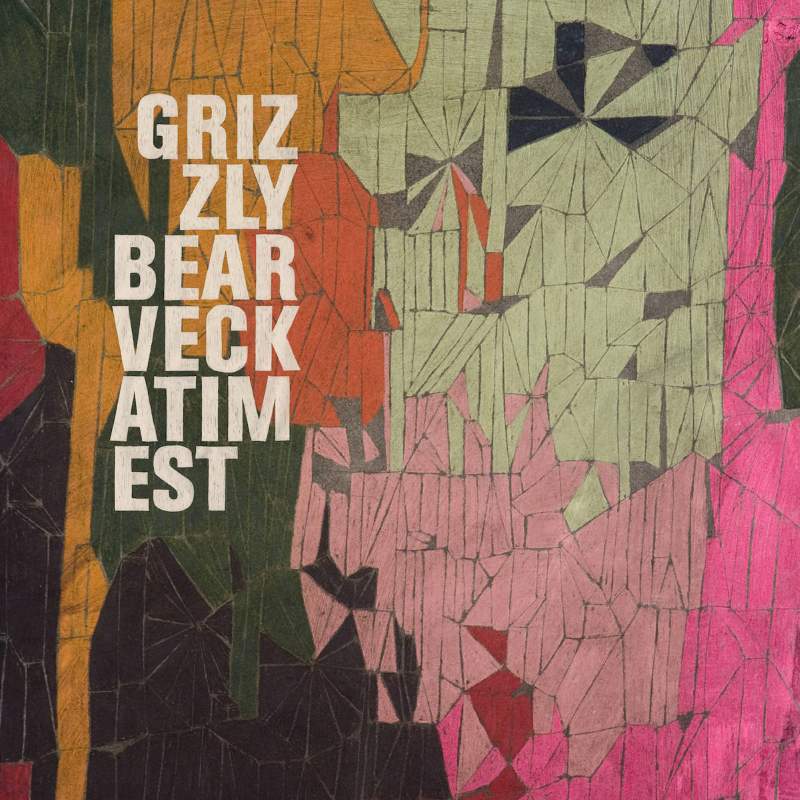
Listening today, Veckatimest almost resembles a museum artefact. A stuffy, buttoned-up exercise in sonic perfectionism, with simple melodic shapes precisely arranged around ornate baroque flourishes and simpering harmonies, knitted together by jazzy percussion. The band’s musicianship and layering of textures are impressive, but they already sound exhausted by the end of “Two Weeks,” the record’s admittedly sublime second track. The rest of the album feels designed for admiration rather than adoration; feet are tapped, bearded chins are stroked, but there is nothing here to stir the heart.
Brian Eno famously said that everyone who bought The Velvet Underground & Nico formed a band. Veckatimest sold more copies in its first week than the Velvets’ debut managed in its first five years, but if any of its early champions did form bands, they failed to make much of an impression during the 2010s. The same could even be said of Grizzly Bear, who never quite escaped the texturally-obsessed cul-de-sac of Veckatimest, releasing two further albums—2012’s Shields and 2017’s Painted Ruins—to diminishing interest and sales.
 No Ripcord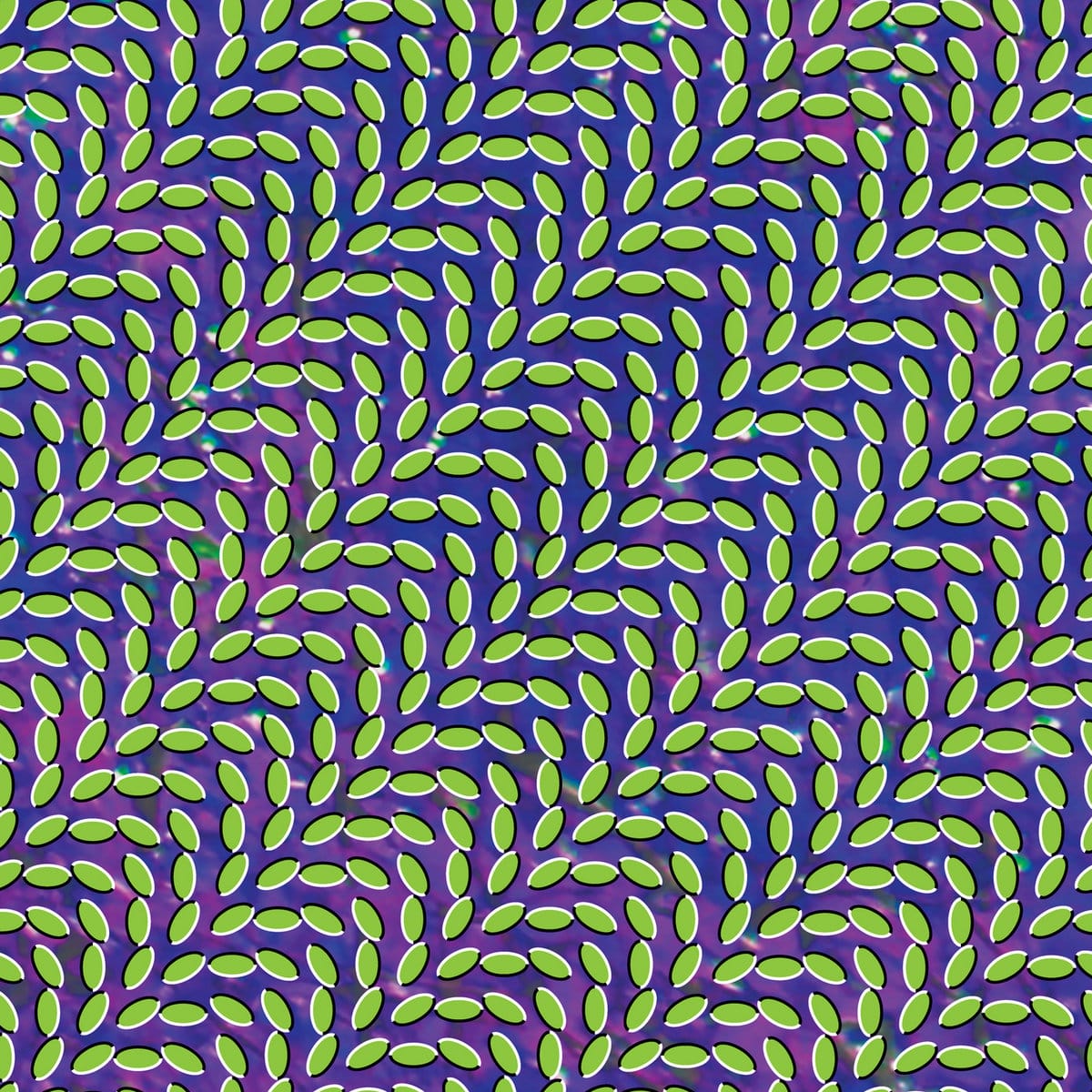
Merriweather Post Pavilion has clearly aged better, but it’s still hard to separate the album from its hype and subsequent reputation. One thing that’s clear, however, is that it represented the very end of Animal Collective’s imperial phase—a period that began with 2004’s Sung Tongs, before picking up pace with 2005’s Feels and 2007’s Strawberry Jam, which I still think is their strongest work.
The Flaming Lips—the decade’s other foremost psychedelic band—made a bold pivot in 2009 with the wonderfully bleak Embryonic, which demonstrated a degree of self-awareness that their admittedly rather different version of whimsical, technicolour psych-folk had perhaps run its race.
A lot of fuss was made at the time about Merriweather’s prioritisation of electronics over guitars, but listening back, the band’s familiar ’00s motifs are all over this record. Merriweather is no rebirth; its eleven tracks represent a stylistic evolution rather than a revolution. And, if you listen very carefully, there are hints that Animal Collective’s creative well was already starting to run dry, something the lacklustre Centipede Hz would later confirm.
For every shimmering, exuberant anthem (“My Girls,” “In The Flowers,” “Brother Sport”) there is a corresponding track that adds little to the experience. The vertiginous “Daily Routine” has a charming subject matter and unconventional structure, but after two or three listens to admire its construction, I can’t find a compelling reason to revisit it. The bouncy “Lion in a Coma” has a novel 9/8 time signature, but again, it’s a song I appreciate rather than love. Indeed, listening back, the whole four track section from “Guys Eyes” to “No More Runnin” feels like a bit of a slog—it’s cerebral, yes, but rarely captivating. That’s a big problem in terms of the record’s longevity, and I suspect its influence.
Exploring the sharp end of No Ripcord’s Best Albums of 2010 list, I’m struggling to identify any records that owe a significant debt to either Veckatimest or Merriweather. Further down our list, the Big Echo by The Morning Benders (#50) features Grizzly Bear’s Chris Taylor as co-producer. Local Natives (#49) obviously share similar influences, but it’s a stretch to say Gorilla Manor is inspired by Grizzly Bear. Yeasayer’s Odd Blood (#46) does seem to doff its cap to Merriweather—“Ambling Alp” is perhaps the strongest supporting evidence—but it‘s the only example out of a fifty records that does. It‘s quite remarkable that nothing in the top 25 bears even a passing resemblance to 2009’s rival picks for AOTY.
An argument can certainly be made that Merriweather exerted an influence on chillwave, but the longevity of that trend was fleeting at best. Besides, Panda Bear’s 2007 album Person Pitch surely had a much bigger impact, along with music by the likes of Ariel Pink and Bradford Cox’s Atlas Sound (who despised the association).
As the 2010s progressed, indie music fragmented, with newcomers looking to a more diverse range of influences. Artists like St. Vincent, Mitski, Beach House, Sharon Van Etten, Perfume Genius, Car Seat Headrest, Parquet Courts, The War on Drugs, Big Thief, and Tame Impala helped to define the decade, and all would have existed in pretty much the same form without Veckatimest and Merriweather.
Looking back at 2009 for clues, there is another record that would prove to have a far greater impact on the ensuing decade: The xx’s wonderful debut, xx. Compared to Merriweather’s swirling maximalism and Grizzly Bear’s heavy use of texture, xx sounds strikingly minimalist. And it still makes for a stunning experience 17 years on, with its clear R&B influences, deft percussion, and exemplary command of negative space. More importantly, its DNA can be found in so much of the music of the 2010s—not just indie, but pop, R&B, and Hip Hop, too. Even the most ardent defender of Merriweather or Veckatimest would struggle to make a defensible case for influence on that scale.
 No Ripcord
Obviously, we all perceive cultural shifts from our own unique perspectives. Almost every critic who rushed to anoint Merriweather and Veckatimest as the landmark release of 2009 would have heard xx. “It’s hard to imagine a more tightly arranged album released this year—or, for that matter, a more innovative one,” we argued, before ranking it a relatively lowly #25 in our Best Of list. The extent of xx’s vitality and importance just wasn’t clear to us at the time.
Ultimately, though, we were bewitched by those other two records to the point of distraction. I feel we overrated both—Veckatimest more than Merriweather—and overstated their importance. The winds of change were swirling on the horizon, but we were too obsessed with the end of 2000s indie to consider the sonic future that awaited us.
But maybe I should have seen it.
On 5 November 2009, I saw St. Vincent supporting Grizzly Bear in Leeds. Annie Clark was phenomenal; Grizzly Bear were utterly tedious, a complete non-event. Their fussy, studio-assembled compositions sounded lifeless and profoundly beige. Clark would go on to eclipse them, becoming a major player in the 2010s by pushing her sound in bold genre-defying directions. Her eponymous fourth album St. Vincent topped our Best Albums of 2014 list. In retrospect, the torch was passed on that tour, and the changing of the guard was playing out right in front of my eyes: I just failed to join the dots.
No Ripcord has published reviews by 100+ writers over 27 years. We’ve awarded every score, from 0/10 to 10/10, and we’ve made our fair share of mistakes. While music critics are anything but a homogeneous bunch, individual variation tends to even itself out, and the cream ultimately rises to the top. Occasionally, though, an element of groupthink appears to play a role in the elevation of a record to a status its contents alone don’t appear to justify. From my perspective, the response to Phoebe Bridgers’ Lost Weekend is a recent example of this.
I believe this is what happened in 2009. While criticism is by its very definition a subjective response to a piece of art, the hyperbolic response to records like Veckatimest and Merriweather only fuels our commitment to maximising honesty and retaining perspective in our writing. But even when we get things wrong, the inevitable march of time continues to prove one thing: hindsight will always be the great equaliser.
No Ripcord has published independent music criticism since 1999.
Support our work with a $20 annual subscription.
Comments ()