

Beverly Glenn-Copeland – Laughter In Summer
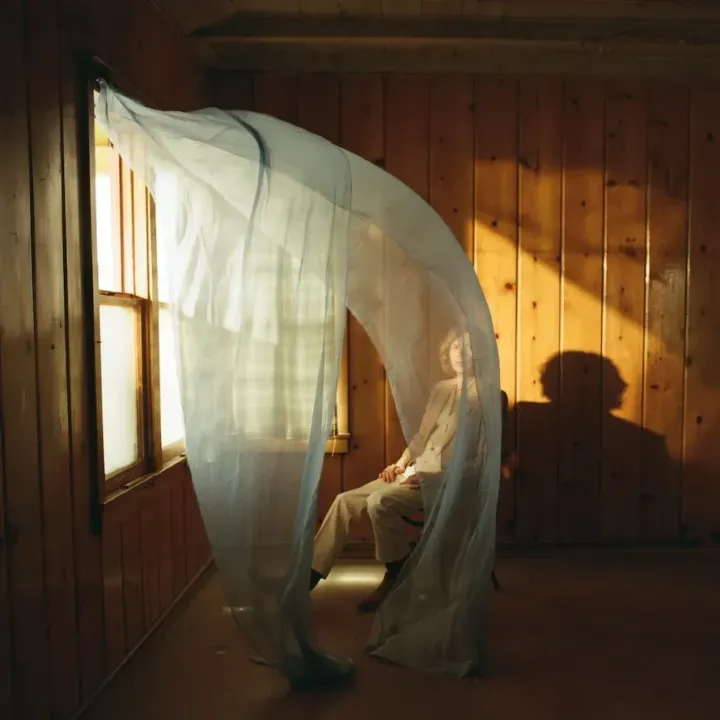
At 82, electronic music pioneer Beverly Glenn-Copeland meets his devastating diagnosis with characteristic grace. A mix of reworked classics and new songs, Laughter In Summer stands as a tender testament to his enduring love.

Beverly Glenn-Copeland’s story is a truly remarkable one. Born in Philadelphia 82 years ago, Glenn-Copeland became one of McGill University’s first Black students, found work in children’s television (Sesame Street, Mr. Dressup), and in 1986 recorded and self-released an obscure little new age album called Keyboard Fantasies. Glenn-Copeland met his future wife, Elizabeth Copeland, in 1992 and continued working across music and the arts, while also engaging in political activism. A decade later, in 2002, he began publicly identifying as a trans man.
In 2015, the mesmerising Keyboard Fantasies was rediscovered and publicised by Japanese record collector Ryota Masuko. To suggest the record received a critical reappraisal seems like an overstatement; it only sold a handful of copies and didn’t even reach a critical audience the first time around. Glenn-Copeland won a Polaris Music Prize in 2020 and quickly became a beloved figure and an unlikely live draw.
Glenn-Copeland has embraced the belated attention his clear talents have deservedly attracted, with his trademark sense of calm and humility. At 82, he faces a new challenge in the form of dementia, but crucially, he is not facing it alone.
Laughter In Summer, a collaborative project with Elizabeth, is a beautiful record in a conceptual sense. It is the sound of tenderness, a deeply loving relationship facing its greatest challenge—a heady mix of nostalgia, bravery, celebration, with an understandable hint of fear. It’s a different beast compared to Keyboard Fantasies, which is no surprise given the passage of time. The synths are out, replaced by sparse piano arrangements, and while Glenn-Copeland’s smooth, soulful voice has understandably weathered, it still sounds great. And it’s arguably a better fit for the record’s theme of mortality, meshing nicely with Elizabeth’s softer vocal contributions.
As is the case on any record it features on, Glenn-Copeland’s timeless classic “Ever New” is the best thing on Laughter In Summer. Recorded in one take—as is the case for the whole record—with a choir and piano backing at Montreal’s Hotel2Tango studio, this very human version sounds as affecting as his electronic original. It’s a magical song, and Glenn-Copeland’s masterwork.
Another Keyboard Fantasies track, “Let Us Dance” appears in two movements which bookend the album. Again, it has been reworked for piano and vocal, and the first movement in particular provides another welcome highlight, emphasising the unassuming power of the album that eventually made his name.
There is new material, too. “Laughter In Summer” speaks of a simple memory (“Laughter in summer/I will remember/June through September/Hеre with you”), but the unspoken factor is that dementia cruelly renders such memories fragile and temporary. This context provides a gravity that such a simple composition might not possess without knowledge of Glenn-Copeland’s backstory, which, to be fair, is a challenge throughout. Is the music independently powerful, or is it the couple’s heartbreaking situation that creates the feeling of power?
I think the answer is simply, it depends.
At its best, Laughter In Summer is deeply affecting and genuinely beautiful. At its least compelling (“Children’s Anthem,” “Harbour”), it remains enjoyably wholesome, but falls well short of his finest work, where Glenn-Copeland’s simple lyrical sentiments were adorned with more engaging layers and textures. Still, it feels unreasonable to grumble, especially when Laughter In Summer touches upon a topic that remains slightly taboo, not only in popular music but in the wider public discourse. Even at 82, it turns out Glenn-Copeland is still blazing a unique trail.
Laughter In Summer is out now via Transgressive.

No Ripcord reviews will always be free to read. If you value independent music criticism, you can support the site with a $20 annual subscription.


Comments ()