

Groovy, Laidback & Nasty: A History of Independent Music in Sheffield
Daniel Dylan Wray’s Groovy, Laidback & Nasty is a meticulously researched history of Sheffield music that captures the city’s strange mix of creativity, humility, and myth-making. Its appeal will extend far beyond the city’s boundaries.
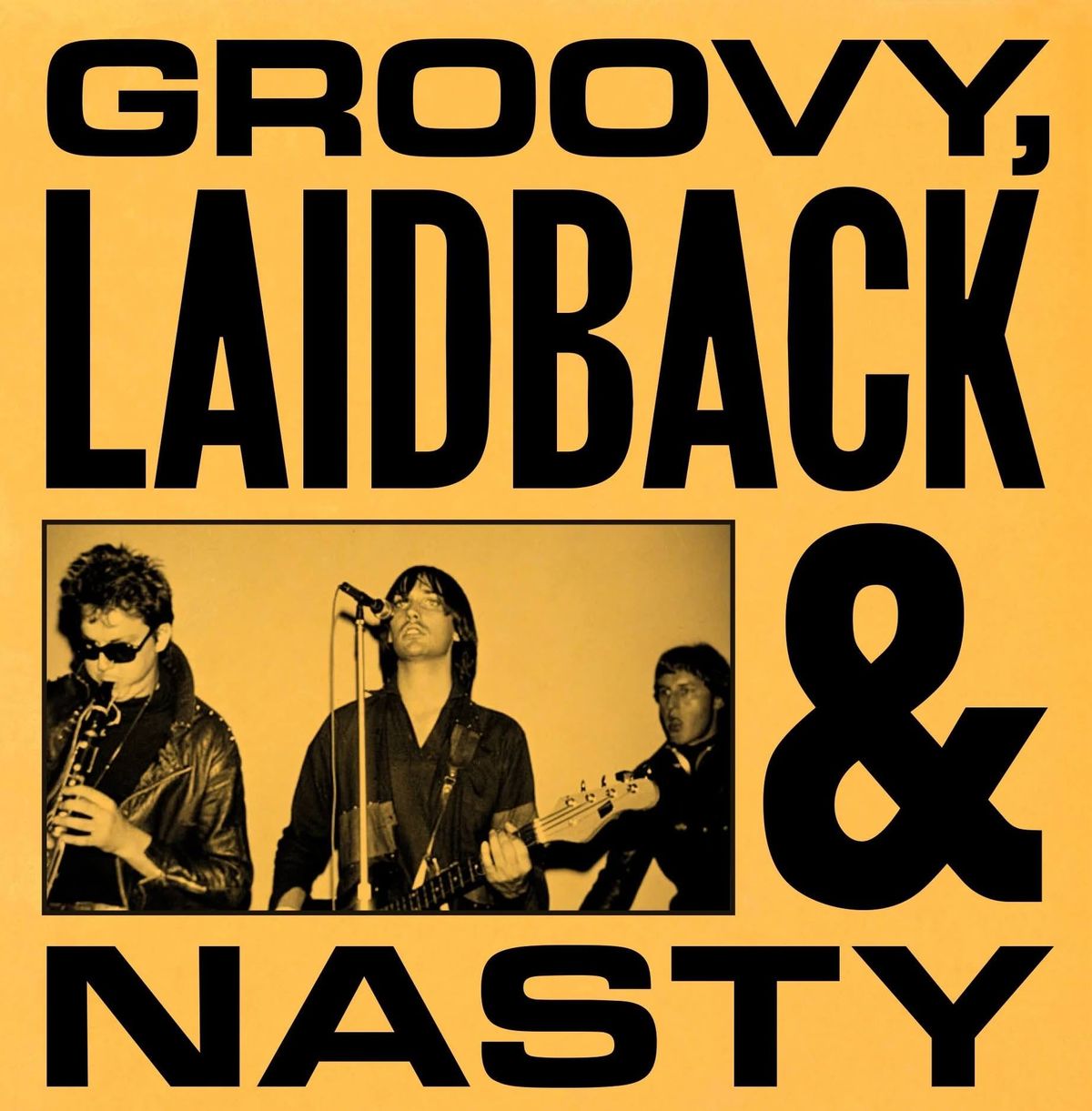
In our 27-year history, No Ripcord has published the work of around 200 different writers. One of the great pleasures of overseeing a small independent publication is seeing contributors past and present thriving in pastures new. No Ripcord alumni have been published in most major music publications; they’ve launched best-selling newsletters; several have written books—fiction, non-fiction, academic texts, even pornographic novels. One disappeared, became a Tory, and ran for parliament—unsuccessfully, but still, it’s notable. Putting political differences aside, I’m proud of them all.
Daniel Dylan Wray contributed to No Ripcord around fifteen years ago and is now recognised as one of the UK’s foremost cultural writers, a regular contributor to The Guardian, Uncut, and others. Like me, Wray lives in Sheffield, but I must stress I have never met him and this article is not an act of nepotism. While I enjoy his writing and regard him as an especially effective interviewer, I approached his debut book, Groovy, Laidback & Nasty, with a mild degree of scepticism. I wanted to explore the reasons behind that.
I am not from Sheffield. I have called the city my home for 26 years, but I’m certainly not a partisan cheerleader for its music scene. Indeed, the city’s current musical malaise is one of my bigger frustrations about living here. From my perspective, Sheffield’s bubble seemed to burst just as I arrived. 2000 was the year that Warp relocated to London; 2001’s We Love Life confirmed the end of Pulp’s imperial phase. These two events are seemingly unrelated, but Pulp and Warp sustained the city’s reputation in the 1990s, and without them, Sheffield immediately seemed less significant—and I don’t think it’s ever recovered.
Groovy, Laidback & Nasty doesn’t subscribe to this curmudgeonly viewpoint, but it is to Wray’s credit that it doesn’t read like a sentimental hagiography either. In the book’s introduction, he outlines why Sheffield—a city of “near-pathological humility”—deserves this exhaustive chronicle of its musical history. Reading it, I realised that my own scepticism was in part fuelled by this very local sense of not making too much of a fuss about things. Well, I guess I have spent more than half my life in South Yorkshire, so it’s understandable that it’s left its mark.
I had anticipated enjoying the ’70s and ’80s sections the most, as those decades were clearly Sheffield’s cultural heyday. I’ve already read an awful lot about Pulp, Britpop, and the 1990s. I find Arctic Monkeys and the scene that erupted around them rather tedious. Richard Hawley has written some pleasant songs but is arguably overrated within the city. Self Esteem’s Prioritise Pleasure is one of the strongest Sheffield-associated releases of the 21st century, but its successor, A Complicated Woman, is an uninspired retread. Sheffield’s true claim to fame is its rich period of creativity during the 1970s and 1980s, and Wray manages the period exceptionally well, having interviewed representatives from all of the key players. With the exception of Pulp and Arctic Monkeys super-fans, this is the section of Groovy, Laidback & Nasty that should appeal most to readers from beyond the Steel City.
But the book’s secret weapon is actually its 1960s coverage. Granted, much of this centres around the controversial, self-mythologising figure of Peter Stringfellow, but it was fascinating to learn more about how the city responded to the rapid emergence of popular music as a cultural form, and how this shaped the city’s musical destiny in its own way. There’s a wonderful anecdote about The Beatles being ferried to a ballroom in Gleadless in the back of Stringfellow’s Ford Anglia.
Of course, Stringfellow’s hubris exemplifies a paradox that sits at the heart of Groovy, Laidback & Nasty: a city’s musical history is a tale told by its victors. In Sheffield’s case, some of these, by the very nature of their (relative) success, lack the city’s trademark humility. This is a symptom of the particular branch of non-fiction, of course, and Wray conducted over 150 original interviews for the book—how many more unsuccessful artists or outsiders could one reasonably expect him to consult? But equally, seeing Milburn’s Joe Carnall describe The Reytons as “second- or third-hand” as if his own band were pioneering visionaries smacks of revisionism bordering on delusion. Jon McClure is another prevalent voice in the ’00s and ’10s sections, and while his reflections hint at a greater degree of maturity than he demonstrated during Reverend and the Makers’ brief period of relevance, I would hardly characterise him as humble either.
One extremely humble figure whom I would have liked to hear more from is Stephen Fellows of The Comsat Angels. When No Ripcord interviewed Fellows in 2009, he described himself as “easily the worst player” in his own band and seemed genuinely embarrassed at the praise heaped on his band by the likes of Mark Kermode, who dubbed them “the band Joy Division could have been” and “the best band in the world”. As far as I’m concerned, the Comsats’ legendary three-album run of Waiting For A Miracle (1980), Sleep No More (1981), and Fiction (1982) constitutes the strongest sequence of releases by any Sheffield artist, regardless of era. And yes, that includes Pulp.
When we spoke to him, Fellows remarked that “Sheffield was never a particularly good place for us to play in the past,” and in one of a handful of references to the band, Wray mentions that The Sheffield Star described The Comsat Angels’ sound as “music to wash clothes to.” He also notes that Jarvis Cocker called the band “boring.” This division interests me, and I can’t help but feel The Comsats’ diminished standing has something to do with them simply not fitting in. “I don’t think living in Sheffield made any difference to the songs really,” Fellows told us in 2009—perhaps his band’s reluctance to make being from Sheffield their whole identity is a key reason I rate them so highly?
Arguably, Wray’s greatest triumph is interweaving some wonderful peripheral figures and fascinating tangents into Sheffield’s story. Small venues, labels, and promoters are celebrated as integral parts of the city’s musical melting pot. And his decision to include a less celebratory story—that of the notorious Nine O’Clock Service, which he carefully describes as “largely considered to have been a dangerous and nefarious cult”—should be applauded, as it is a part of Sheffield’s musical history, whether we like it or not.
I always expected Groovy, Laidback & Nasty to be a meticulously researched, well-written history of Sheffield’s music scene. What I perhaps hadn’t appreciated was how deep Wray would delve into the city’s musical soul, and quite how many untold stories were worth telling. He should be commended for his execution, of course, but Groovy, Laidback & Nasty is first and foremost a triumph of vision. He has done No Ripcord proud.
Groovy, Laidback & Nasty is out now via White Rabbit Books.
Related Articles
 David Coleman


Comments ()